Your people are already using AI, with or without a policy. Governance isn’t about blocking that — it’s about directing it. Performance Connectivity, Inc. (PCI) sets the guardrails and unlocks the productivity, from a firm that uses these tools every day, not one that read about them.
Performance Connectivity, Inc. (PCI) is a technology advisory and managed IT firm in Purchase, NY, owner-run since 1997 and serving Westchester County and Fairfield County businesses. AI governance is the set of decisions about which tools are approved, what data they can touch, and who’s accountable when the output is wrong — PCI sets those guardrails and unlocks the productivity, from a firm that uses these tools every day, not one that read about them. Your people are already using AI; governance is how you direct it instead of hoping for the best.
Somebody on your team pasted client data into a chatbot this week. Not out of carelessness — because it made their job easier. That’s not a problem to punish. It’s a signal.
The real questions are who approved the tool, what data it’s allowed to touch, and who’s accountable when it’s wrong. Answer those, and AI becomes something you direct instead of something happening to you.
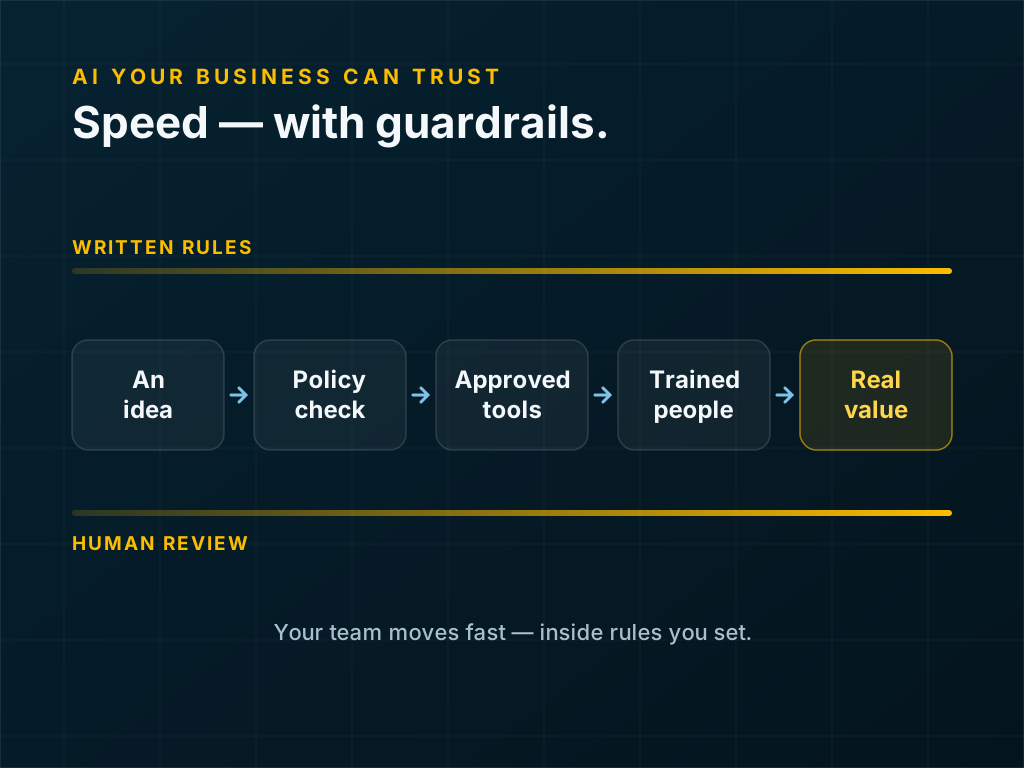
Four decisions, made once, that let your team move fast without exposing the business.
A short, deliberate list of what your team is cleared to use — and why — instead of a free-for-all where every app gets a login and no one is tracking it.
Clear lines on what data can go where. Client information, financials, and anything regulated stay on the right side of the line — by design, not by hope.
A named owner for AI in your business. Someone whose job it is to answer for what the tools touch and what they produce — so it isn’t everyone’s job and therefore no one’s.
Short enough to read, practical enough to keep. A policy that gets ignored is worse than none — it just means everyone’s improvising while believing they’re covered.
The difference between AI that helps and AI that wastes time is context. Generic prompts give generic answers. We wire in your context, then aim AI at the tasks where it actually moves the needle.
We run these tools inside our own firm — every day, on real work. So we bring back what actually works and what quietly doesn’t, instead of repeating what a vendor deck promises. Knowing where AI stops and human judgment takes over is the whole value.
Est. 1997 · Purchase, NYRegulators, insurers, and clients are starting to ask how you govern AI — what it touches, who signed off, whether you can show your work. Governance that’s already in place keeps you defensible when those questions arrive, the same way documented IT compliance answers the questions examiners bring.
We account for that as a risk to stay ahead of — never a box we sell you. It’s one more reason to direct AI deliberately, not a reason to buy something.
It is a signal, not a scandal. People reach for AI because it makes their job easier, and punishing that just drives it underground. The real questions are which tools are approved, what data they are allowed to touch, and who is accountable when the output is wrong — answer those and you are directing AI instead of hoping for the best.
AI governance is the set of decisions a business makes about how AI gets used: which tools are approved, what data they can touch, who answers for wrong output, and how results get checked before they reach a client. It is not about blocking AI — it is about directing it. Good governance is the difference between AI that compounds productivity and AI that quietly creates exposure nobody owns.
A short list of approved tools and the reasons for them, clear data boundaries for anything client, financial, or regulated, a named owner accountable for AI in your business, and a policy short enough that people actually follow it. Then the productivity half: wiring your context in and aiming AI at the tasks where it returns real hours.
The opposite, when it is done right. A policy nobody reads just means everyone improvises while believing they are covered. Clear guardrails let your team move fast on the tasks where AI helps — drafting, summarizing, first-pass analysis — without wondering whether they have just exposed the business.
By drawing the lines by design, not by hope. Approved tools, explicit data boundaries, and a named owner mean client information, financials, and anything regulated stay on the right side of the line. We run these tools inside our own firm every day, so the boundaries we set are the ones that hold up in practice.
Increasingly, yes. Regulators, insurers, and clients are starting to ask how you govern AI — what it touches, who signed off, and whether you can show your work. Governance that is already in place keeps you defensible when those questions arrive, instead of scrambling to reconstruct decisions after the fact.
On the ground across Westchester County, NY and Fairfield County, CT.
From the Insights desk: Microsoft Build 2026: AI just shifted from “assistant” to “does the work.”
Bring how your team is already using AI. We’ll help you direct it.